

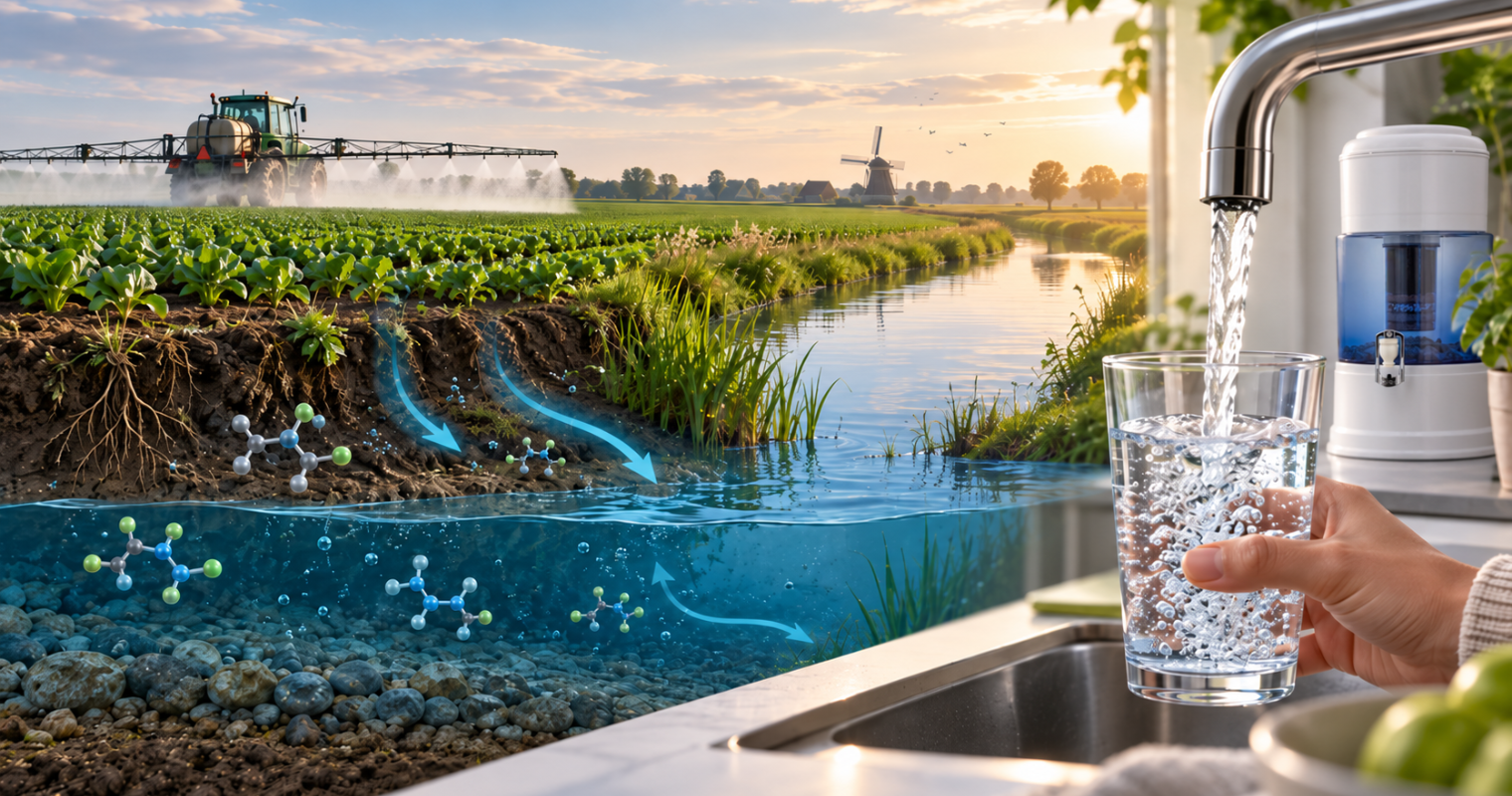
PFAS have been a topic of discussion for years. These substances are very difficult to break down, spread easily throughout the environment, and some PFAS can be harmful to health. Now, the Netherlands Environmental and Transport Inspectorate (ILT) is warning about a source of PFAS pollution that is becoming increasingly significant: pesticides used in agriculture.
According to the ILT, approximately21,000 kilogramsoftrifluoroacetic acid (TFA)enter Dutch waterways each year via pesticides. TFA is produced during the breakdown of certain PFAS-containing pesticides.
That is a remarkably large amount. By way of comparison: according to the ILT, approximately 2,000 kilograms of TFA are released from industry each year.
Use of PFAS-containing pesticides has nearly doubled
The amount of PFAS-containing pesticides used has increased significantly in recent years. According to the inspection authority, the figure was approximately 250,000 kilograms in 2022. By 2024, that figure had already risen to 465,000 kilograms.
Some of these substances eventually break down into TFA. This substance can then spread through the soil and water into surface water and groundwater.
This is particularly concerning because groundwater is an important source of our drinking water.
The ILT warns that TFA is now not only being found in surface water and shallow groundwater layers, but is also penetrating deeper and deeper into the soil.
What makes PFAS so concerning?
PFAS is a collective term for poly- and perfluoroalkyl substances. It refers to a large group of chemicals that are very difficult to break down. As a result, they can persist in the environment for a long time.
Some PFAS are linked to effects on the immune system and other health problems. TFA is also attracting increasing attention. The European Chemicals Agency (ECHA) warned this year that TFA may be more harmful than previously thought.
Furthermore, a recent study by the RIVM found that virtually everyone in the Netherlands has PFAS in their blood.
The question, therefore, is not only how much PFAS we are releasing into the environment today, but also how much of it will continue to accumulate in the coming decades.
Protecting Drinking Water and Taking Action Ourselves
The most important solution, of course, lies at the source: the use and spread of PFAS must be curbed. The ILT therefore advocates for a stricter approach to pesticides containing PFAS.
But what can you, as a consumer, do yourself?
An additional step in protection could befiltering the drinking water you actually consume. Aqualine's water filtersare designed to remove various undesirable substances from water, including PFAS.
That means you don’t have to rely entirely on measures that won’t take effect until the future. By filtering the water you drink and use for things like coffee and tea, you can take an additional step yourself toward cleaner drinking water.
Of course, a water filter is no substitute for the necessary measures to address PFAS contamination at the source. It is a supplementary measure for people who want to further limit their exposure to unwanted substances in drinking water.
Are there alternatives to pesticides?
A ban on pesticides containing PFAS sounds simple, but in practice, it's more complicated.
Wageningen University & Research investigated what alternatives are available. The researchers emphasize that the possibilities must be assessed on a crop-by-crop and active ingredient-by-active ingredient basis.
According to the researchers, there are more options available for controlling weeds and certain pests. Fungus control, however, is more challenging. This applies, for example, to potato and sugar beet cultivation.
Farmers therefore face a difficult challenge: they must protect their crops from diseases and pests, while at the same time the pressure to keep harmful substances out of the environment is growing.
Prevention is better than filtering afterward
The debate over PFAS in pesticides illustrates just how complex environmental problems can become once substances end up in the soil and water.
A pesticide may be used today, yet its effects may remain visible for decades to come—especially when these substances eventually end up in groundwater used for the production of drinking water.
That is why two things are important:
- Prevent pollution at the source.
- Where possible, ensure additional protection for the water we actually consume.
Addressing PFAS requires stricter regulations, cleaner agriculture, and better protection of our water sources. At the same time, consumers can take an additional step on their own to remove PFAS from their drinking water by using a suitable water filter, such as an Aqualine water filter.
Clean drinking water starts with protecting our water sources. And as long as PFAS remain a growing problem there, it’s wise to also consider what you can do on your own.