
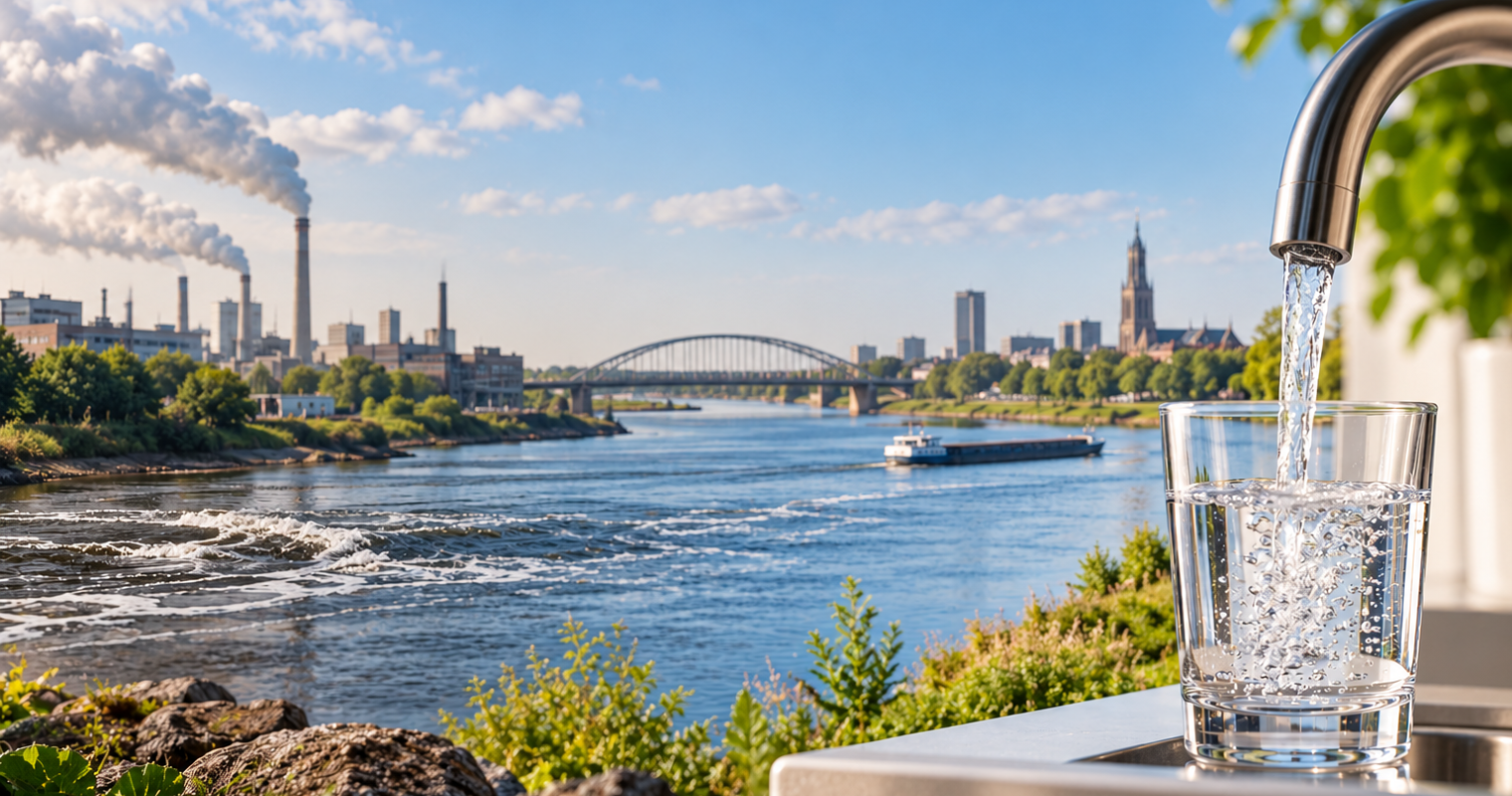
The Netherlands is known for the high quality of its tap water. However, that quality is under increasing pressure. Pollution from other European countries enters our country via the Rhine and Meuse rivers. In addition, Dutch industry, agriculture, and households also contribute to the pollution of our water sources.
Drinking water companies must remove these substances as much as possible before the water comes out of our taps. They are largely successful in doing so, but not entirely. Substances that are particularly difficult to break down, such as PFAS, pose a challenge. In addition, bacterial contamination can occasionally occur, requiring residents to temporarily boil their drinking water.
How does our drinking water become contaminated?
In the Netherlands, drinking water is produced from groundwater and surface water. About 60% comes from groundwater and 40% from surface water, such as the Rhine and Meuse rivers.
It’s not for nothing that the Netherlands is often called the “sewer of Europe.” Substances that end up in rivers in other countries can eventually reach our water sources as well. But we also contribute to the pollution ourselves.
Companies discharge waste; in agriculture, crop protection products are used; and through our sewer system, substances such as drug residues end up in surface water. Historical soil contamination can also affect the quality of groundwater.
Water utilities treat this water before it is safe to drink. Due to the wide variety of chemicals, this process is becoming increasingly complex.
What drinking water problems occur in the Netherlands?
Not all forms of pollution are the same. Some substances are present in our water sources over the long term, while other problems arise suddenly. Below, we discuss the main causes.
PFAS in Drinking Water
PFAS is a collective term for thousands of chemicals used in various products and industrial processes. These substances are very difficult to break down and can spread through the soil and water.
Once released into the environment, PFAS can persist for many years. Some PFAS are linked to adverse health effects, including effects on the immune system.
According to the RIVM, people in the Netherlands are exposed to PFAS through the air, food, and drinking water. The amount we are exposed to through drinking water alone is, on average, below the health-based limit. However, when food and drinking water are considered together, the total exposure does exceed that limit.
According to the ILT, the main source of PFAS pollution is the use of certain pesticides in agriculture. In 2026, it warned that this results in at least 21,000 kilograms of trifluoroacetic acid (TFA) entering Dutch waterways each year. TFA is a substance that is extremely difficult to break down and can be produced during the degradation of certain PFAS-containing pesticides.
In our previous article on PFAS in pesticides and their impact on our drinking water, we discuss this topic in greater detail.
Pesticides and drug residues
In addition to PFAS, other substances also end up in our water sources through agriculture and household activities.
Pesticides are used to protect crops from diseases and pests. Some of these chemicals can enter groundwater and surface water through rainwater and the soil.
Drug residues enter the water in a different way. When we take medications, some of the substances are excreted in our urine and feces. These substances then enter the wastewater treatment plant via the sewer system.
Not all substances can be completely removed during this process. As a result, small amounts may ultimately end up in our drinking water sources.
Bacteria in Drinking Water
Sometimes bacteria can get into the tap water, for example, due to a damaged water pipe or work being done on the water distribution system.
Water utilities therefore regularly test for bacteria such as E. coli and enterococci. If these are detected, it may indicate contamination with human or animal feces. Other pathogens may also be present in the water.
A bacterial infection can cause gastrointestinal symptoms. Young children, the elderly, and people with weakened immune systems are particularly susceptible to this.
If a drinking water utility detects contamination, it may issue a temporary boil-water advisory. Residents must then boil the water they intend to drink for three minutes. The advisory remains in effect until tests confirm that the water is safe to drink again.
Heavy Metals in Drinking Water
Heavy metals can also be found in drinking water. Some metals occur naturally in the soil, while others enter the environment as a result of human activities.
In addition, old water pipes can affect the quality of tap water. A well-known example is lead pipes, which may still be present, especially in older homes.
Lead can leach into the drinking water from these pipes. Exposure to lead is particularly undesirable for young children and pregnant women. That is why it is recommended to replace old lead drinking water pipes.
What happens when drinking water is contaminated?
When a problem with the drinking water is detected, the water utility investigates the cause and takes action. The necessary measures depend on the nature of the contamination.
In the event of a bacterial contamination, a temporary boil-water advisory may be issued. This does not work in the case of chemical contamination: substances such as PFAS, pharmaceutical residues, pesticides, and heavy metals are not removed by boiling the water. In such cases, water utilities temporarily stop drawing water from rivers if contamination is detected there. Where possible, they switch to a different source or adjust the treatment process. In the event of severe contamination, the water utility may advise against drinking tap water temporarily and will provide emergency water supplies.
Water utilities use various techniques to remove unwanted substances from the water. However, some substances, such as PFAS, remain difficult to remove. That is why it remains important to prevent contamination of our water sources as much as possible.
What can you do on your own?
The key to solving drinking water contamination lies at the source. This requires action from the government, industry, and the agricultural sector. If contamination is detected, it is best to follow the official recommendations from your drinking water provider.
Would you also like to reduce the amount of unwanted substances in your daily drinking water? If so, you can choose to filter your tap water as an additional measure.
Tradeline’s Aqualine water filters use various filtration stages to reduce certain substances, including PFAS, pesticides, and heavy metals. The performance of these systems has been tested by independent laboratories. The substances that are reduced and the extent of that reduction can be found in the corresponding test reports.