



Under-sink water filter
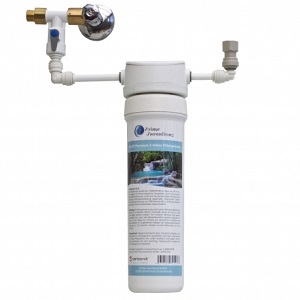
Would you like to enjoy clean drinking water without a bulky filter system on your countertop? With an under-sink water filter, your tap water is filtered right before it comes out of the faucet. The filter can be easily connected to your faucet’s water line and, in some cases, directly to a Quooker. This way, you’ll always have fresh, pure drinking water without taking up extra space in your kitchen.
Price
Material
Product categories
"Good product. This is my second water tank before I get another space."
With the whole family at
the healthy water
- from 3 persons
- Beautiful design for your kitchen
- For drinking and cooking
Which Aqualine do you need?
In just a few minutes, you'll know which Aqualine best suits your needs
Why choose an under-the-tap water filter?
An under-sink water filter combines ease of use with a compact design. Below, you can read about the practical benefits this solution offers:
- Space-saving: No large filter system visible on the countertop; it’s neatly concealed underneath. Ideal for a sleek or minimalist kitchen design.
- Easy installation: It is installed directly between the cold-water pipe and the faucet. You can often do this yourself, without any major modifications.
- Always clean drinking water: Removes substances such as chlorine*, bacteria, medication residues, and microplastics. This improves both the taste and the quality of the drinking water.
- Compatible with Quooker: All under-sink models can be connected to a Quooker, so that the hot water is also filtered.
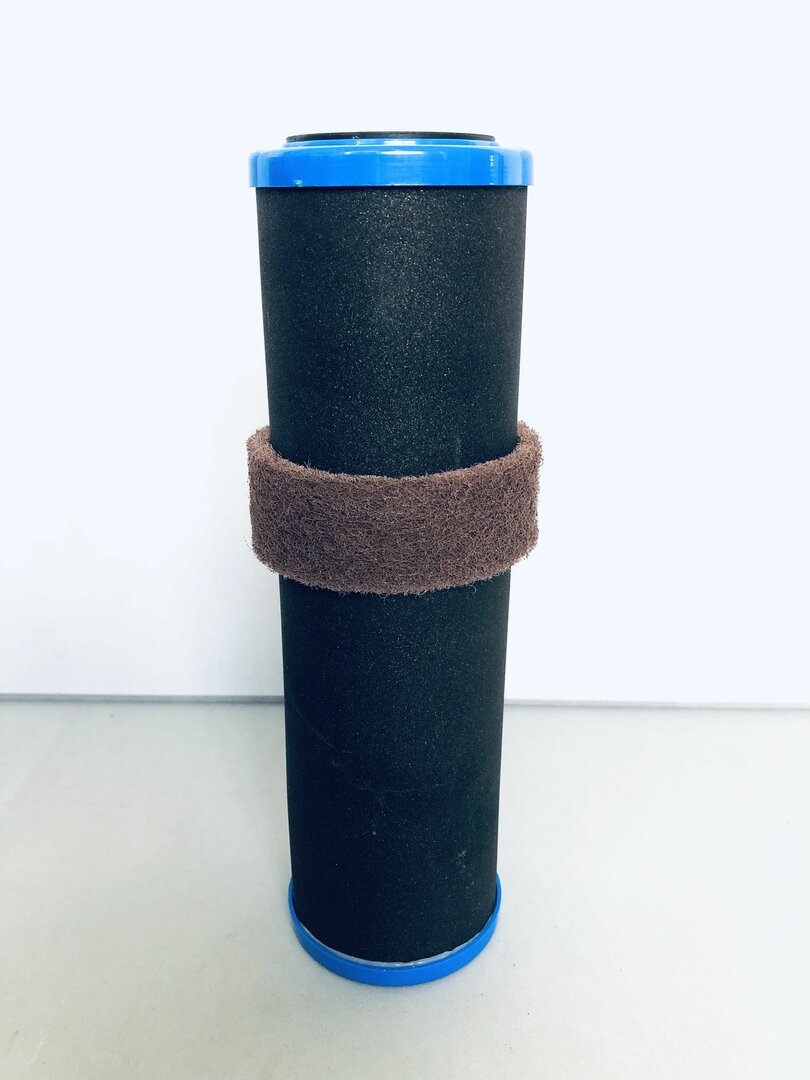
- Easy filter replacement: Filters are easy to replace, usually using a click-in system (Aqua Avanti) or by opening the housing (Aqualine WP 100 and Aqua Logic).
- Faucet: To prevent the cold (filtered) water from coming into contact with the hot (unfiltered) water, it is recommended to install a three-way faucet or a separate low-pressure faucet. This is not necessary if the system is combined with a Quooker, as the Quooker already uses a separate faucet.
*Chlorine is not added to tap water in the Netherlands.
Durable and easy to use
With an under-sink water filter, you’ll make life a lot easier for yourself and contribute to a more sustainable lifestyle. You won’t have to buy bottled water anymore, which means you’ll produce less plastic waste. The filter does its job automatically as soon as you turn on the faucet: no hassle with separate pitchers or devices, but clean water always right at your fingertips.
What does an under-sink water filter remove?
Exactly what a filter removes from the water varies by system. An under-sink water filter can reduce or remove various substances from tap water. Which substances are removed depends on the type of filter and the filtration technology used.
Typically, this involves filtering the following substances:
- Chlorine* and chlorine compounds
- Drug residues
- Bacteria and Microorganisms
- Microplastics
- Heavy metals (such as lead and copper)
- Dirt particles such as sand or rust
*Chlorine is not added to tap water in the Netherlands.
Types of under-sink filters
Not every filter works exactly the same way. Depending on your needs, you can choose from several options:
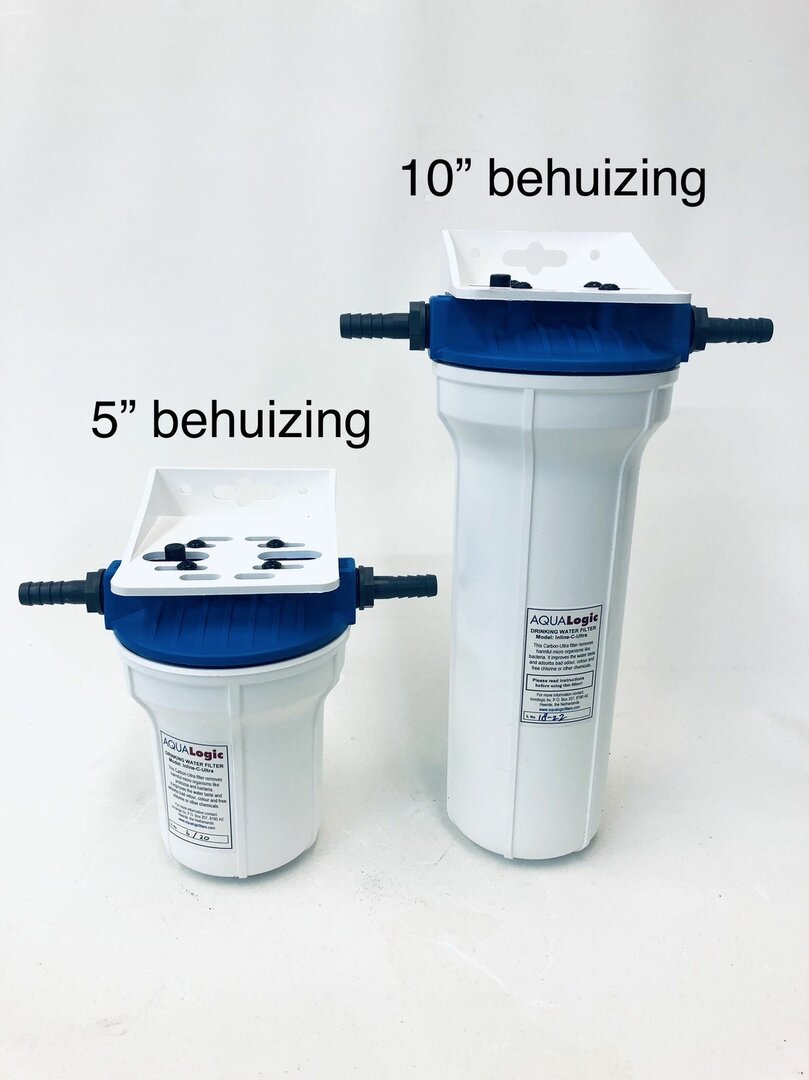
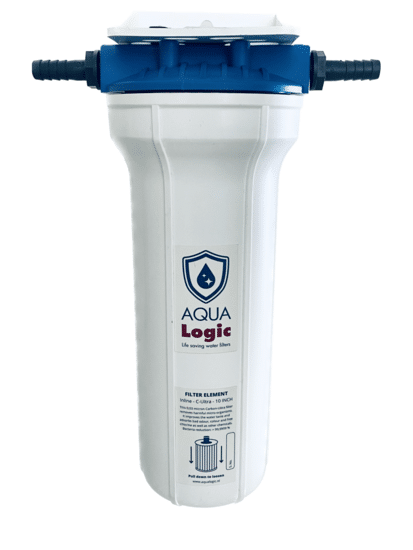
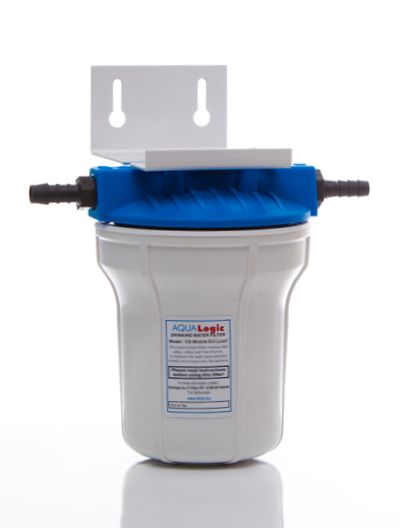
- Compact inline filters: small filters that connect directly to the pipe. Available in various sizes (for example, 5” or 10”), with the larger size having a higher capacity.
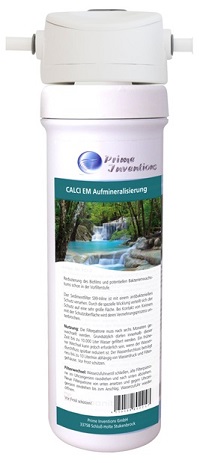
- Modular systems: filters that you can expand with cartridges, such as a water softener or mineralizer. Handy if your tap water contains a lot of limescale or if you want to improve the mineral balance.
- Faucets with a separate spout: Some models have a separate spout for filtered water, so your faucet can dispense both regular tap water and filtered drinking water.
How do you connect the water filter to your faucet?
The water filters we supply are designed for single-point-of-use. These are filters intended to be installed directly upstream of a single water outlet (such as a kitchen or bathroom faucet).
These water filters are connected directly between the water line and the faucet. Be sure to check out our faucets for water filters as well, so you can see what options are available for your situation.
Install it yourself or hire someone to do it?
If you’re handy, it’s usually easy to install it yourself. If you want to be sure that everything is connected properly and safely, you can also have a plumber do the installation. You’ll find the instruction manual included with every under-sink water filter. You can discuss this with your plumber, for example.
Buy water filter at Tradeline
At Tradeline, you'll find a wide selection of water filters. We've been importing filters from South Korea and Germany since 2001. These have been carefully selected for their reliability and effectiveness.
Whether you choose an under-sink filter, a filter for the main water line, or an Aqualine water filtration system, you can count on us for quality and expert advice. Feel free to contact us if you’d like to know which type is best suited to your situation.
Choose a Tradeline water filter and experience the difference in water quality. Order today and enjoy pure, healthy, and safe drinking water!
Most Frequently Asked Questions
An under-sink water filter is a compact and efficient solution for purifying tap water without needing a separate filter system on the countertop. The filter is installed directly between the cold-water line and the faucet, so the water is filtered before it flows out of the faucet.
With an under-sink water filter, you always have immediate access to filtered tap water, without separate pitchers or large appliances getting in the way. The filter removes substances such as chlorine, bacteria, medication residues, and microplastics, making the water taste better and be healthier to drink. Maintenance is simple: you usually only need to replace the filter a few times a year. What’s more, some models are compatible with a Quooker, so the hot water is filtered as well.
A standard under-sink water filter does not remove limescale, with the exception of the Aqua Avanti. The Aqua Avanti is a modular system consisting of a main filter and the necessary connection components. This water filter can be expanded with a water softener and, if desired, a mineral cartridge to add some extra minerals.
It is not recommended to connect a water filter to a standard mixer faucet. In a mixer faucet, the cold (filtered) water is mixed with the hot (unfiltered) water, which means the cold water can also become contaminated.
It is better to replace the current valve with a three-way valve or a separate low-pressure valve.
The three-way faucet has an outlet for the regular hot and cold water you currently use and a separate outlet just for the filtered water.
A low-pressure faucet can be installed on the countertop as an additional faucet. Only filtered water comes out of this faucet.
Yes, some filters, such as the Aqualine Logic and the Aqua Avanti, can be connected to a Quooker. This ensures that the filtered water is stored directly in the hot water tank, so you can enjoy filtered water even when using hot water.
Prices start at around €150 and can go up to several hundred euros. This depends on the filtration technology used, the capacity, and the brand.
An under-sink filter only filters the water from the faucet to which it is connected. A filter installed on the main water line, on the other hand, filters all the water that enters your home, including the water for the shower and washing machine.
